The Art of Jaipur Handblock Printing Explained: A Timeless Craft Behind Jaipur Cotton Suits
Discover the timeless art of Jaipur handblock printing and how it brings life to elegant Jaipur cotton suits. Learn about its rich history, intricate process, and why these handcrafted cotton outfits remain a favorite for...
Jaipur, often called the Pink City of India, is not just famous for its palaces and vibrant culture—it is also a global hub for traditional textile craftsmanship. Among its many artistic treasures, handblock printing stands out as a centuries-old technique that continues to captivate fashion lovers across the world. If you’ve ever admired the elegance of Jaipur cotton suits, you’ve already witnessed the beauty of this intricate art form.
In this blog, we’ll explore the fascinating world of Jaipur handblock printing, its history, process, cultural significance, and why it remains the heart of authentic Jaipur cotton suits.
A Glimpse Into History
Handblock printing in Jaipur dates back over 300 years. The craft flourished under royal patronage when skilled artisans, particularly from the Chhipa community, were encouraged to settle in Rajasthan. These artisans brought with them techniques that combined precision, patience, and creativity.
Natural dyes, intricate motifs, and hand-carved wooden blocks became the foundation of this art. Over time, Jaipur evolved into a major center for textile production, especially for cotton fabrics. Even today, the legacy lives on through generations of artisans who continue to produce stunning Jaipur cotton suits using traditional methods.
What Makes Handblock Printing Unique?
In an age dominated by machine-made textiles, handblock printing offers something rare—authenticity.
Each piece is crafted manually, which means no two designs are exactly the same. This slight variation is not a flaw but a mark of originality. When you wear Jaipur cotton suits made using handblock printing, you’re wearing a piece of art that carries human touch and heritage.
Some defining characteristics include:
- Handcrafted precision using carved wooden blocks
- Eco-friendly processes with natural or low-impact dyes
- Distinctive patterns inspired by nature, Mughal art, and Rajasthani culture
- Soft, breathable cotton fabric ideal for everyday wear
The Step-by-Step Process of Handblock Printing
Understanding the effort behind each piece helps you truly appreciate the value of Jaipur cotton suits.
1. Preparing the Fabric
The journey begins with raw cotton fabric. It is thoroughly washed to remove impurities like starch, oil, and dust. This ensures that the dye adheres properly to the fabric.
2. Designing and Carving the Blocks
Artisans carve intricate designs onto wooden blocks, usually made from teak wood. Each color in a design requires a separate block. These blocks are masterpieces in themselves and can take days or even weeks to create.
3. Dye Preparation
Traditionally, natural dyes derived from plants, minerals, and flowers were used. While modern methods sometimes incorporate synthetic dyes for consistency, many artisans still prefer eco-friendly options.
4. Printing the Fabric
This is the most skill-intensive stage. The artisan dips the wooden block into dye and presses it firmly onto the fabric. The process is repeated with perfect alignment to create seamless patterns.
Even a minor misalignment can disrupt the design, so it requires immense focus and experience.
5. Drying and Fixing the Colors
Once printed, the fabric is dried in the sun. It is then treated to fix the colors, ensuring they don’t fade easily. Some fabrics are also washed again to enhance softness.
Motifs and Patterns: Stories in Fabric
Jaipur handblock printing is known for its rich variety of motifs, each telling a story.
- Floral designs inspired by Mughal gardens
- Paisley (Kairi) patterns symbolizing fertility and growth
- Geometric shapes reflecting symmetry and balance
- Animal and bird motifs representing nature and folklore
These patterns are a key reason why Jaipur cotton suits are so visually appealing. They blend tradition with timeless aesthetics, making them suitable for both modern and ethnic wardrobes.
Why Jaipur Cotton Suits Are So Popular
Jaipur cotton suits have gained immense popularity not just in India but globally—and for good reason.
Comfort Meets Style
Cotton is breathable, lightweight, and perfect for warm climates. When combined with handblock printing, it creates outfits that are both stylish and comfortable.
Versatility
Whether it’s daily wear, office attire, or casual outings, Jaipur cotton suits fit every occasion. You can dress them up with accessories or keep them simple for an elegant everyday look.
Sustainable Fashion Choice
As consumers become more conscious of their environmental impact, handblock printed cotton suits offer a more sustainable alternative to fast fashion.
Cultural Connection
Wearing handblock prints is also a way to support traditional artisans and keep heritage crafts alive.
The Role of Jaipur in Modern Fashion
While rooted in tradition, Jaipur handblock printing has adapted beautifully to contemporary fashion trends.
Designers and brands now experiment with:
- Fusion wear
- Indo-western silhouettes
- Minimalist patterns
- Modern color palettes
Yet, the essence of the craft remains unchanged. Jaipur cotton suits continue to be a staple in ethnic fashion, bridging the gap between heritage and modernity.
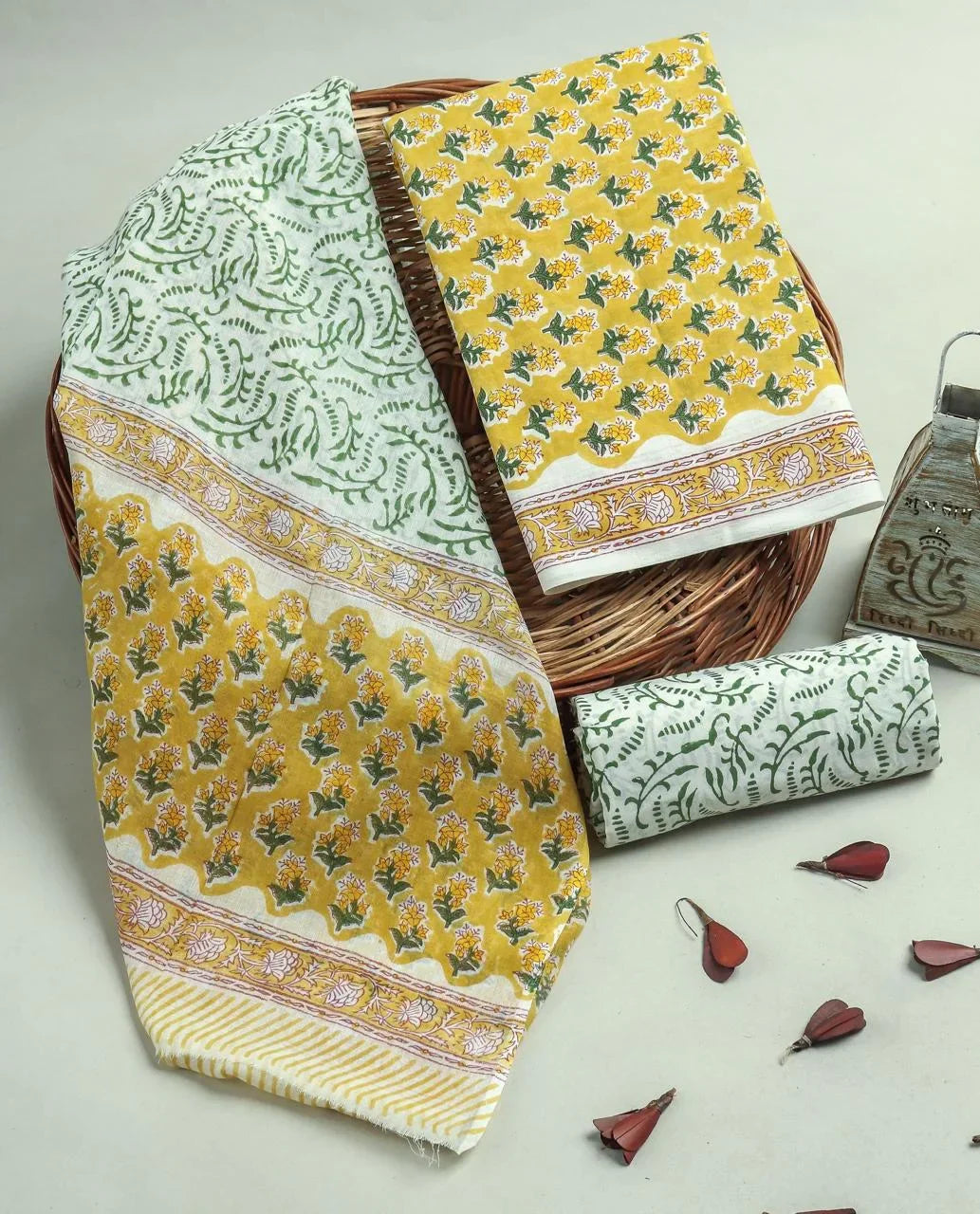
Pure cotton Suits With Cotton Dupatta

How to Identify Authentic Handblock Prints
With increasing demand, machine-printed imitations have become common. Here’s how you can spot the real thing:
- Slight irregularities in patterns (a sign of handmade work)
- Visible dye marks on the reverse side of the fabric
- Soft, natural feel of the cotton
- Subtle color variations rather than flat, uniform tones
Authentic Jaipur cotton suits will always have a unique charm that machines cannot replicate.
Caring for Handblock Printed Cotton Suits
To maintain the beauty of your garments:
- Wash separately in cold water
- Use mild detergents
- Avoid direct sunlight for long drying periods
- Do not bleach
Proper care ensures that your Jaipur cotton suits remain vibrant and long-lasting.
Supporting Artisans and Local Craft
When you invest in handblock printed clothing, you’re doing more than buying fashion—you’re supporting livelihoods.
Thousands of artisans depend on this craft for their income. By choosing authentic Jaipur cotton suits, you help sustain:
- Traditional skills
- Rural employment
- Cultural heritage
This makes your purchase meaningful beyond aesthetics.
The Future of Handblock Printing
Despite challenges from mass production, handblock printing is experiencing a revival. Growing awareness around sustainability and slow fashion has brought renewed attention to handcrafted textiles.
E-commerce platforms, social media, and global demand are helping artisans reach wider audiences. As a result, Jaipur cotton suits are becoming more accessible while retaining their authenticity.