
Difference Between Pure Cotton and Cotton Blend: Which Fabric Is Right for You?
When shopping for clothes, bedsheets, towels, or home textiles, you've probably come across two common fabric labels—Pure Cotton and Cotton Blend. While they may seem similar at first glance, they differ significantly in terms of comfort, durability, maintenance, price, and overall performance.
So, how do you decide which one is the better choice?
The answer depends on your lifestyle, budget, and the purpose of the fabric. Whether you're looking for breathable summer clothing, wrinkle-resistant office wear, or durable everyday apparel, understanding the difference between pure cotton and cotton blends can help you make a smarter purchase.
In this comprehensive guide, we'll compare both fabrics, explore their pros and cons, and help you determine which option suits your needs best.
What Is Pure Cotton?
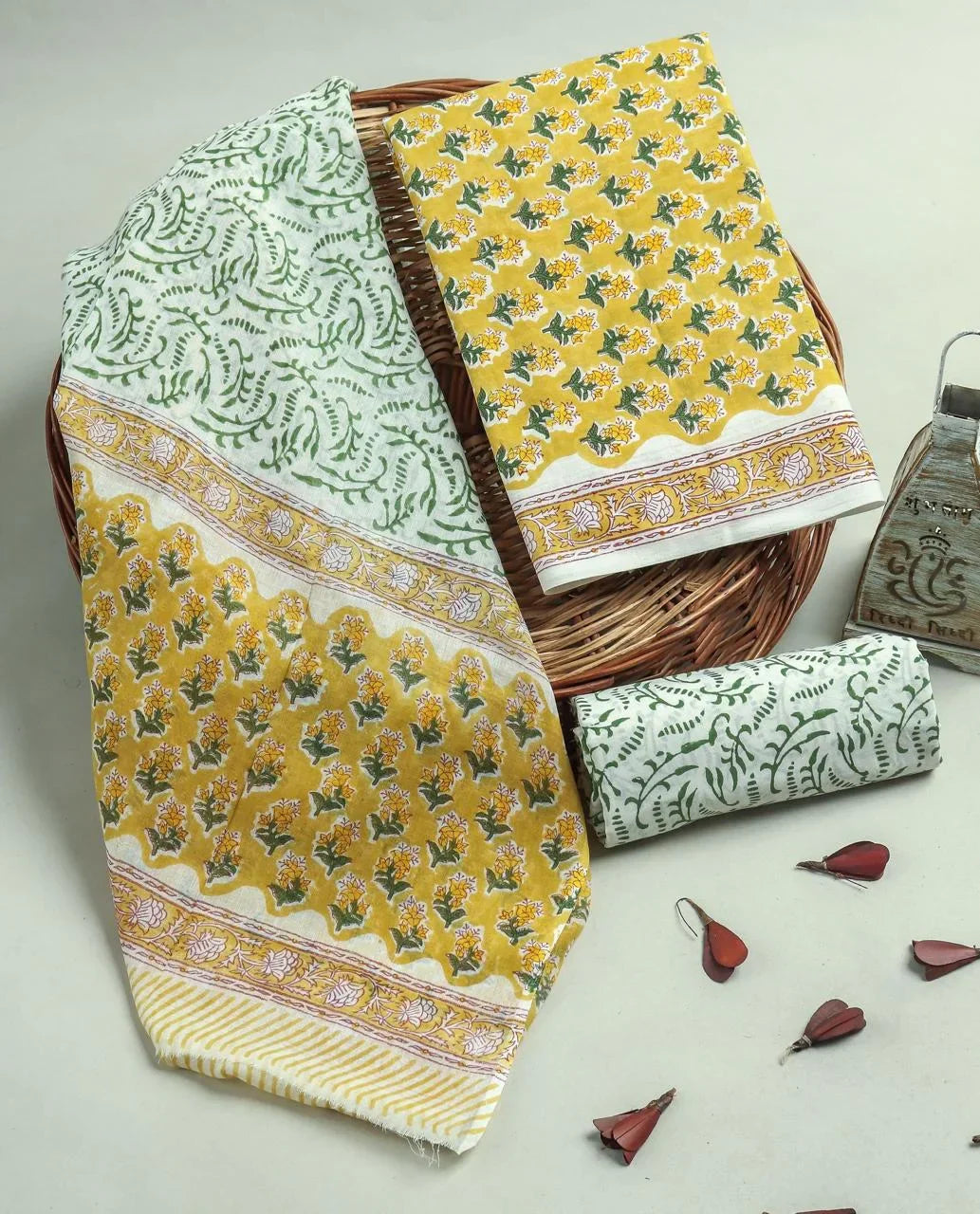
Pure cotton is a natural fabric made from 100% cotton fibers harvested from the cotton plant. Since it contains no synthetic materials, it is highly valued for its softness, breathability, and comfort. unstitched cotton suits
Cotton has been used for thousands of years and remains one of the world's most popular natural fibers due to its versatility and skin-friendly properties.
Key Characteristics of Pure Cotton
- Made entirely from natural cotton fibers
- Soft and comfortable
- Highly breathable
- Excellent moisture absorption
- Biodegradable and eco-friendly
- Hypoallergenic for sensitive skin
Pure cotton is commonly used in:
- T-shirts
- Shirts
- Dresses
- Baby clothing
- Bedsheets
- Pillow covers
- Towels
- Undergarments
What Is Cotton Blend?
A cotton blend is a fabric made by mixing cotton with one or more synthetic or natural fibers. The most common blends include:
- Cotton + Polyester
- Cotton + Spandex
- Cotton + Rayon
- Cotton + Linen
- Cotton + Modal
The purpose of blending cotton is to improve certain properties such as durability, stretch, wrinkle resistance, and affordability.
For example:
A fabric containing 60% cotton and 40% polyester is known as a cotton-polyester blend.
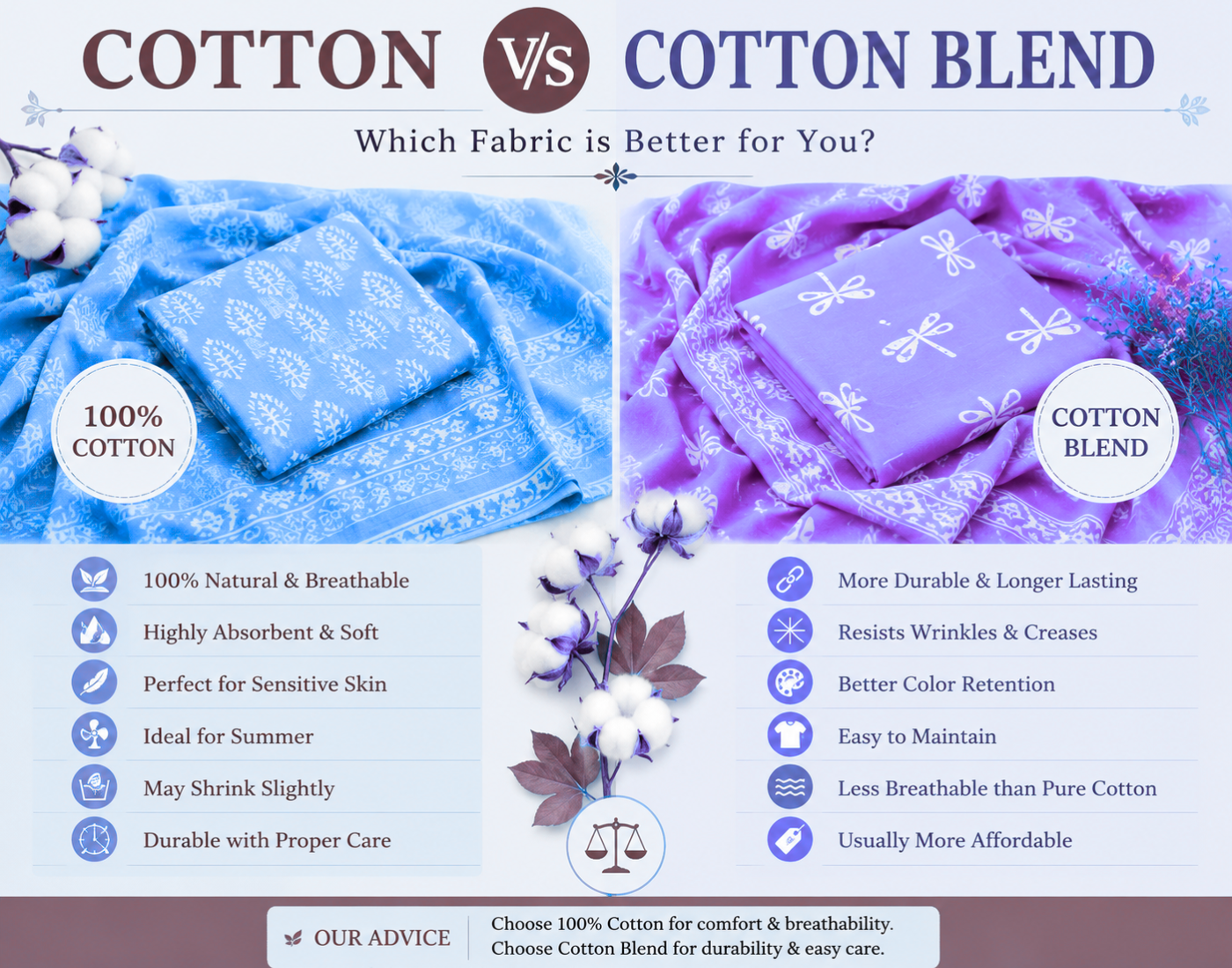
Pure Cotton vs Cotton Blend: Quick Comparison
| Feature | Pure Cotton | Cotton Blend |
|---|---|---|
| Material | 100% Cotton | Cotton + Other Fibers |
| Comfort | Excellent | Good to Excellent |
| Breathability | Excellent | Moderate to High |
| Softness | Very Soft | Depends on Blend |
| Wrinkle Resistance | Low | High |
| Durability | Moderate | High |
| Stretch | Very Little | Often Stretchy |
| Moisture Absorption | Excellent | Moderate |
| Drying Time | Slow | Faster |
| Maintenance | More Care Required | Easy to Maintain |
| Price | Usually Higher | Usually Affordable |

Benefits of Pure Cotton
1. Superior Comfort
One of the biggest reasons people choose pure cotton is comfort.
The natural fibers allow air to circulate freely, keeping the body cool even during hot weather. The fabric feels gentle against the skin and becomes even softer after repeated washes.
This makes pure cotton ideal for daily wear. pure cotton suits cotton dupatta
2. Excellent Breathability
Cotton naturally allows heat and moisture to escape.
During summer, breathable clothing prevents excessive sweating and keeps you comfortable throughout the day.
People living in warm climates often prefer pure cotton because it helps regulate body temperature.
3. Skin-Friendly
Pure cotton rarely causes irritation or allergic reactions.
It is often recommended for:
- Babies
- People with eczema
- Sensitive skin
- Allergy sufferers
Since it contains no synthetic fibers, it reduces the chances of skin discomfort.
4. Highly Absorbent
Cotton absorbs sweat effectively, making it an excellent choice for:
- Casual wear
- Summer clothing
- Sleepwear
- Towels
It keeps moisture away from your skin and improves comfort.
5. Environmentally Friendly
Being a natural fiber, cotton is biodegradable and renewable.
When responsibly sourced, it has a lower environmental impact compared to petroleum-based synthetic fibers.
Drawbacks of Pure Cotton
Despite its many advantages, pure cotton isn't perfect.
Wrinkles Easily
Cotton creases quickly, which means frequent ironing is often required.
Shrinkage
Improper washing or drying can cause cotton garments to shrink.
Longer Drying Time
Because cotton absorbs a lot of water, it takes longer to dry.
Less Durable
Compared to blended fabrics, pure cotton may wear out faster after years of heavy use.
Benefits of Cotton Blend
Cotton blends were created to overcome many of cotton's limitations.
Let's explore why they have become increasingly popular.
1. Better Durability
Synthetic fibers like polyester strengthen the fabric.
Cotton blends are less likely to tear, stretch out, or lose shape after repeated washing.
This makes them suitable for everyday clothing.
2. Wrinkle Resistance
One major advantage of cotton blends is that they stay smooth.
Unlike pure cotton, they require minimal ironing, making them perfect for busy lifestyles.
3. Faster Drying
Polyester and other synthetic fibers reduce water absorption.
As a result, cotton blends dry much faster than pure cotton.
This is especially useful for:
- Travel
- Gym wear
- Sports clothing
- Daily laundry
4. Better Shape Retention
Blended fabrics maintain their original shape even after frequent washing.
They resist stretching and sagging, increasing garment longevity.
5. More Affordable
Since synthetic fibers are generally cheaper than natural cotton, blended fabrics are often more budget-friendly.
This makes them an attractive option for families and bulk purchases.
Drawbacks of Cotton Blend
Cotton blends also have a few disadvantages.
Less Breathable
Synthetic fibers reduce airflow.
As a result, cotton blends may feel warmer than pure cotton in hot weather.
Lower Moisture Absorption
Blended fabrics don't absorb sweat as effectively as pure cotton.
This may lead to discomfort during extremely humid conditions.
May Cause Skin Irritation
Some people with highly sensitive skin may find synthetic fibers less comfortable than 100% cotton.
Environmental Concerns
Blends containing polyester are less biodegradable than pure cotton and can release microplastics during washing.
Which Fabric Lasts Longer?
If durability is your priority, cotton blends generally outperform pure cotton.
Polyester fibers improve resistance to:
- Stretching
- Shrinking
- Wrinkling
- Tearing
- Color fading
Pure cotton remains durable but usually shows signs of wear sooner under heavy use.
Which Fabric Is Better for Summer?
For hot and humid weather, pure cotton is the clear winner.
Its breathable structure:
- Allows better airflow
- Absorbs sweat
- Keeps the body cooler
- Prevents overheating
This is why many summer collections feature 100% cotton garments.
Which Fabric Is Easier to Maintain?
Cotton blends require significantly less maintenance.
They:
- Dry quickly
- Resist wrinkles
- Shrink less
- Need less ironing
- Retain their appearance longer
If convenience matters, cotton blends are an excellent choice.
Which Fabric Is Better for Office Wear?
Cotton blends are often preferred for professional clothing.
Why?
Because they:
- Stay wrinkle-free longer
- Hold their shape
- Require less ironing
- Maintain a neat appearance throughout the day
Many formal shirts contain a cotton-polyester blend for this reason.

Which Fabric Is Better for Sleeping?
For pajamas, bedsheets, and pillowcases, pure cotton offers unmatched comfort.
Its breathable nature helps regulate body temperature while sleeping and reduces sweating during warm nights.
How to Identify Pure Cotton and Cotton Blend
Here are some simple ways to distinguish between them:
Check the Label
The easiest method is reading the fabric composition.
Examples include:
- 100% Cotton
- 80% Cotton, 20% Polyester
- 95% Cotton, 5% Spandex
Feel the Fabric
Pure cotton feels:
- Softer
- Cooler
- More natural
Cotton blends often feel smoother or slightly more synthetic
Wrinkle Test
Squeeze the fabric tightly.
If it wrinkles heavily, it is likely pure cotton.
If it quickly returns to its original shape, it is probably a cotton blend.
When Should You Choose Pure Cotton?
Choose pure cotton if you value:
- Natural fabrics
- Maximum comfort
- Breathability
- Sensitive skin protection
- Summer clothing
- Eco-friendly materials
- Premium bedsheets and towels
When Should You Choose Cotton Blend?
Cotton blends are ideal if you want:
- Durable clothing
- Budget-friendly options
- Wrinkle-resistant garments
- Easy maintenance
- Fast drying fabrics
- Travel-friendly clothing
- Stretch and flexibility\
Common Uses of Pure Cotton vs Cotton Blend
Pure Cotton
- Casual T-shirts
- Summer shirts
- Baby clothes
- Bedsheets
- Towels
- Sleepwear
- Handkerchiefs
Cotton Blend
- Office shirts
- School uniforms
- Activewear
- Hoodies
- Jeans
- Workwear
- Sportswear
Which One Offers Better Value?
There isn't a universal winner.
If comfort is your highest priority, pure cotton delivers exceptional softness and breathability.
If durability and convenience matter more, cotton blends provide excellent value with lower maintenance.
Many people actually benefit from having both:
- Pure cotton for home, summer, and sleepwear
- Cotton blends for work, travel, and everyday use
This balanced approach offers the best of both worlds.
Final Thoughts
Choosing between pure cotton and cotton blend ultimately depends on how and where you'll use the fabric. Pure cotton stands out for its natural comfort, breathability, and skin-friendly qualities, making it ideal for warm climates, sleepwear, and anyone with sensitive skin. Cotton blends, on the other hand, shine in terms of durability, wrinkle resistance, and ease of maintenance, making them a practical choice for busy lifestyles and everyday wear.
Before buying any garment or home textile, always check the fabric composition on the label. Understanding what you're purchasing ensures better value for your money and helps you select a fabric that matches your comfort, lifestyle, and care preferences.
Whether you choose the luxurious softness of pure cotton or the practical performance of a cotton blend, making an informed decision will ensure you enjoy your purchase for years to come.